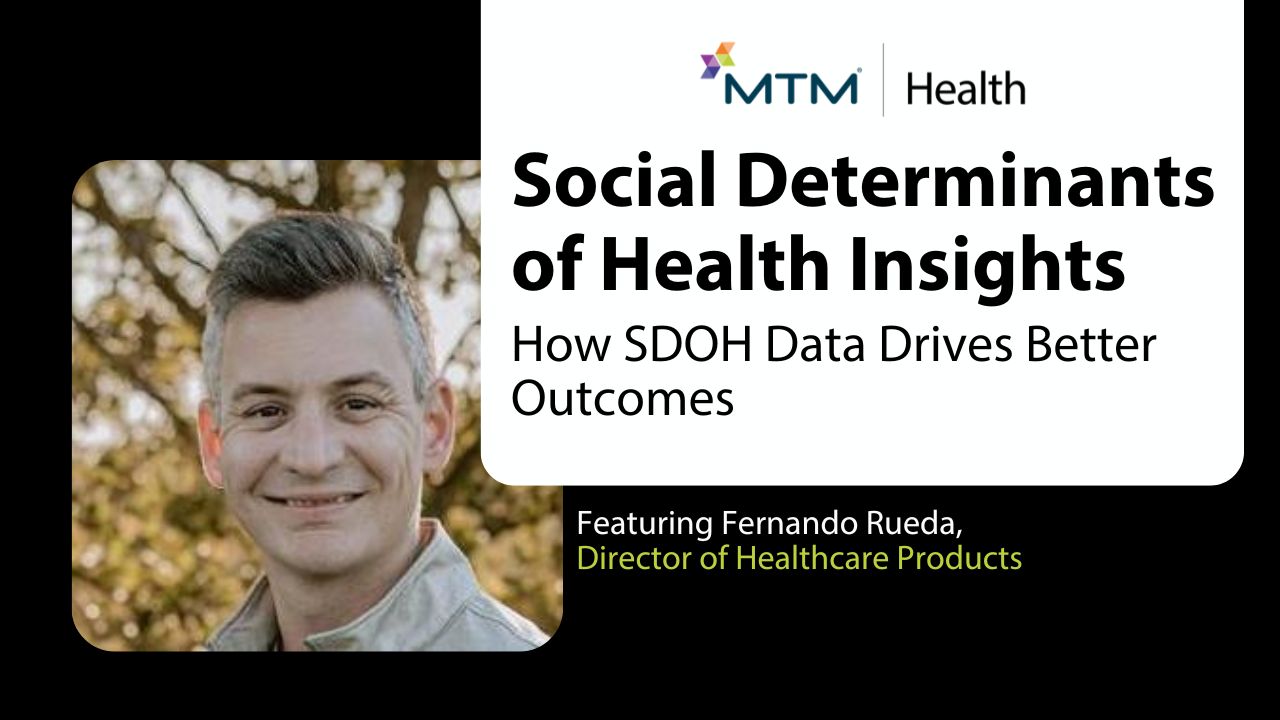
SDOH Insights: How SDOH Data Drives Better Outcomes
Social determinants of health (SDOH) are the non-medical factors that influence health outcomes, including transportation, housing, food access, and social support. Each quarter, MTM Health spotlights initiatives that improve outcomes for members and clients nationwide by tackling SDOH and dismantling community barriers.
In this Q2 2026 edition, we spoke with Fernando Rueda, Director of Healthcare Products, about how transportation is one of the most critical—and measurable—drivers of healthcare access.
The Importance of Reliable Transportation
If members can’t reliably get to care, the result is often missed appointments, delayed treatment, worsening health conditions, and increased healthcare costs. Fortunately, transportation data is becoming more accessible and actionable, providing healthcare organizations with a powerful way to identify barriers before they negatively impact outcomes.
Through platforms like MTM Link, non-emergency medical transportation (NEMT) data can serve as a real-time indicator of access challenges. Patterns such as no-shows, long travel distances, repeated transportation requests, or gaps in care can reveal issues that may otherwise go unnoticed. This allows health plans and NEMT brokers to shift from reacting to problems after they occur to proactively addressing them before they escalate.
Revealing Hidden Barriers
Many health plans understand that transportation can be a barrier to care, but identifying which members are struggling, and why, is often the challenge.
Some of the most common warning signs include frequent appointment cancellations, rescheduling, no-shows, heavy reliance on call center support, long-distance travel for care, and repeated need for assistance throughout the transportation process. These patterns often point to broader challenges, such as limited access to resources, digital literacy barriers, or caregiver dependency.
By monitoring these indicators, health plans and their NEMT vendors can gain a deeper understanding of member needs and identify opportunities for early intervention.
Turning Data into Action
The value of transportation data lies in its ability to drive meaningful action.
MTM Health and our MTM Link platform help the health plans and state Medicaid agencies we work with transform operational data into actionable insights. By tracking utilization trends, identifying network adequacy gaps, and highlighting high-risk or underserved populations, organizations can better understand where support is needed most.
These insights can be used to prioritize outreach, coordinate transportation before appointments are missed, connect members to community resources, and improve care management workflows. Rather than waiting for a care gap to appear, organizations can proactively support members and reduce barriers to care.
Looking Ahead
As healthcare continues to evolve toward more personalized and proactive care models, data-driven approaches will become increasingly important. Transportation data has the potential to fundamentally change how organizations identify risk, engage members, and address SDOH.
The future of SDOH strategy will also depend on innovative transportation models that expand access while generating actionable insights. In a recent LinkedIn article on VeyoRide, MTM Health President and CEO Alaina Macia highlighted the importance of advancing transportation solutions that improve access and outcomes, emphasizing that better rides equal better health outcomes. When combined with platforms like MTM Link, these innovations help healthcare organizations gain richer visibility into member needs, identify barriers earlier, and strengthen care management strategies.
Transportation should no longer be viewed simply as an operational service. It is a strategic source of insight that can help health plans improve outcomes, reduce costs, and advance healthcare access. When we can identify barriers earlier, we can take action sooner—and ultimately deliver better care for the populations we serve.
Categories
- Alaina Macia (39)
- Employee Wellness (19)
- ETO Newsletter (64)
- Events (70)
- MTM Health eNewsletter (83)
- News & Events (729)
- Technology (2)
- Tradeshows (57)
- Uncategorized (17)
- Webinars (15)